Pensions
A household has one retirement, not two
Couples routinely plan two separate pensions and then retire into a single shared budget. The gap between those two facts causes most of the surprises.
Everything below about planning retirement as a couple comes from what actually happens rather than from what is supposed to.
What holds up in practice
- Household retirement income is the relevant total, not each person's balance.
- One partner's career break usually leaves a permanent asymmetry in provision.
- Survivor provisions differ sharply between schemes and between marital statuses.
Two plans, one budget
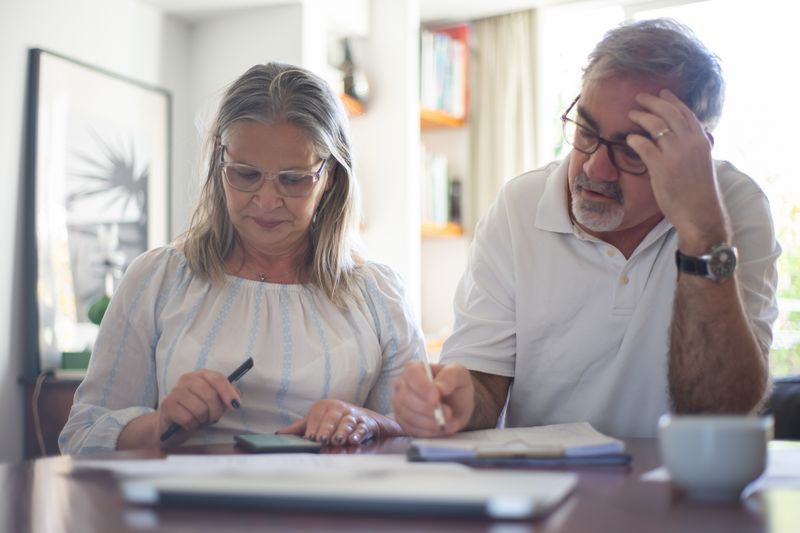
Retirement spending is overwhelmingly shared — housing, energy, food, transport — while provision is accumulated individually. Adding both projections together is the first step, and it is one most couples have never actually done on paper. The combined figure frequently looks better than either alone and sometimes reveals a shortfall neither person could see separately.
Either way it is the number the household will actually live on.
Asymmetry is the normal outcome
Where one adult reduced hours or stopped work for caring, their contributions stopped or shrank while the household benefited. The resulting imbalance in provision is a household outcome carried by one person, which matters if circumstances later change. Some systems allow contributions to be made for a non-earning or lower-earning partner, sometimes with tax advantages.
Whether that is available where you live is worth establishing rather than assuming, and the sums involved often justify regulated advice.
Retiring at the same time is a choice with a price
Couples frequently assume they will stop together, which can mean the younger or later-starting partner retires with fewer contributing years. Staggering exits — one continuing for a period — increases contributions, shortens the drawdown period and often eases the transition. It is less appealing and materially cheaper, which is a trade-off worth making deliberately.
The useful part is this: the right answer depends on health, on the work and on what the couple actually wants from the years involved.
What happens when one person dies
Some schemes pay a reduced continuing income to a surviving spouse or partner; others pay nothing beyond any remaining balance. Rules frequently distinguish between married, civil-partnered and cohabiting partners, and the last group is often the most exposed. Beneficiary nominations on workplace schemes are the mechanism that directs the balance, and stale nominations are extremely common.
Checking each scheme's survivor provisions and updating each nomination is a short task with severe consequences if skipped.
Separation changes everything
Pensions are frequently among the largest assets a household holds and are routinely overlooked or undervalued in separations. How they are treated on divorce differs enormously between countries, and unmarried couples generally have far weaker claims or none.
Anyone in that position should take legal and regulated financial advice specific to their jurisdiction rather than rely on general reading. The relevant point here is simply that the asset exists and should not be forgotten.
Have the conversation with numbers present
Most couples discuss retirement in terms of intentions and almost never in terms of combined projected income. One evening with both sets of statements produces more clarity than years of general agreement. It also surfaces mismatched expectations about when to stop and what to do, which are easier to reconcile early.
Repeating it every few years, as circumstances move, is what keeps the plan connected to reality.
The takeaway
Put both statements on the table together. The household total is the only figure you will live on.
The version you keep doing is the version that works.
Questions readers ask
Can I contribute to a pension for a partner who is not working?
Some systems allow it, sometimes with tax relief up to a limit. Availability and limits vary by country, so check locally and take advice for anything substantial.
What happens to a pension if we separate?
It varies enormously by jurisdiction and by marital status, and pensions are often a major asset in a settlement. This is firmly a matter for legal and regulated financial advice.